The Gesture That Reads from the Back Row
Learn how a gesture reads from the back row through timing, body shape and rhythm, so its meaning remains clear without making every movement larger.
How can a gesture read from the back row without making the performance feel overstated? A gesture reads from the back row when its timing, shape and place in the performer’s movement give the audience a clear change to follow.
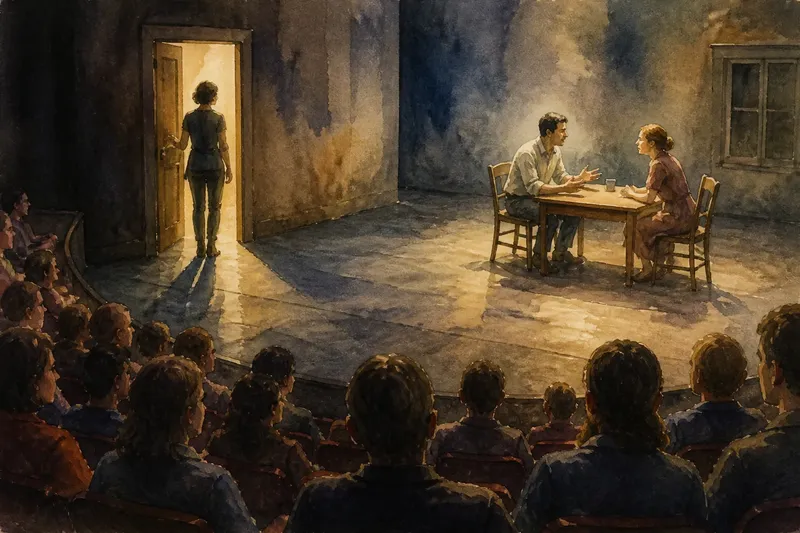
Distance does not call for every action to grow. It calls for selective emphasis: a movement needs enough contrast with what came before and after it to register, while still belonging to the scene’s physical language.
A gesture reads from the back row through contrast
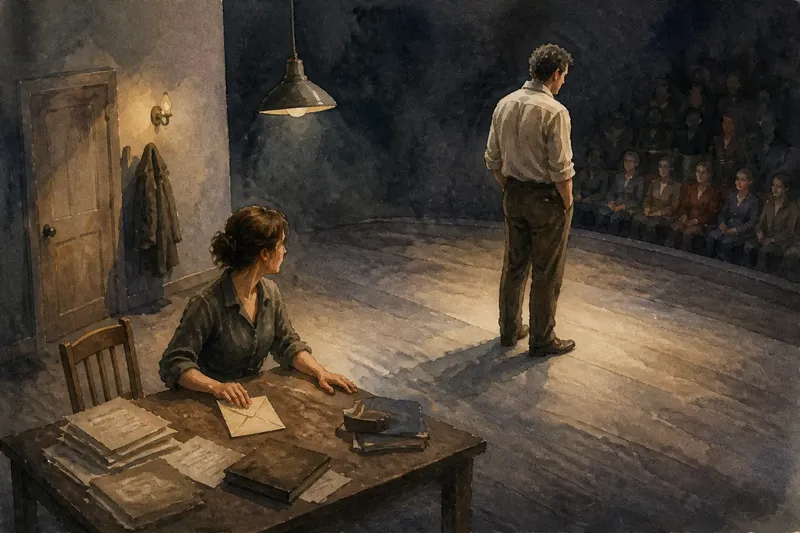
A hand that rises while the performer is otherwise still has a clearer outline than the same hand moving amid constant activity. The contrast may come from a pause, a change of direction or a shift in the body’s balance, rather than from a larger reach.
Think of the gesture as one event within a phrase of movement. Its beginning sets up an expectation, its turn or interruption changes that expectation, and its finish lets the audience register what has altered.
Give the movement a distinct path
At a distance, a hand close to the torso can blend into the body’s outline. A small adjustment in the elbow or shoulder may give the hand a separate path, making the movement easier to distinguish without turning it into a display.
The path should suit the character and the scene. A sudden, clean stop might belong to a moment of alarm; a movement that falters and resumes may suggest hesitation. The physical detail gains meaning from its quality, not from visibility alone.
Let rhythm clarify the change
A rapid gesture can pass before distant viewers have time to recognise it. A pause before or after the action can provide visual punctuation, while leaving the rest of the scene’s pace intact.
Repetition can also make a movement legible, but it should develop rather than merely recur. If the second gesture is smaller, delayed or directed differently, the audience can see that the character’s response has shifted.
Use stillness to make a small action matter
A slight withdrawal of the hand or a tightening of the fingers can carry weight when the body around it is quiet. In a busy sequence, the same detail may be lost beneath walking, turning or other simultaneous actions.
Stillness is not empty time. A performer can remain physically alert, with attention fixed on a person or object, while the body’s quiet gives a smaller movement room to register. This is especially useful when the performance depends on restraint.
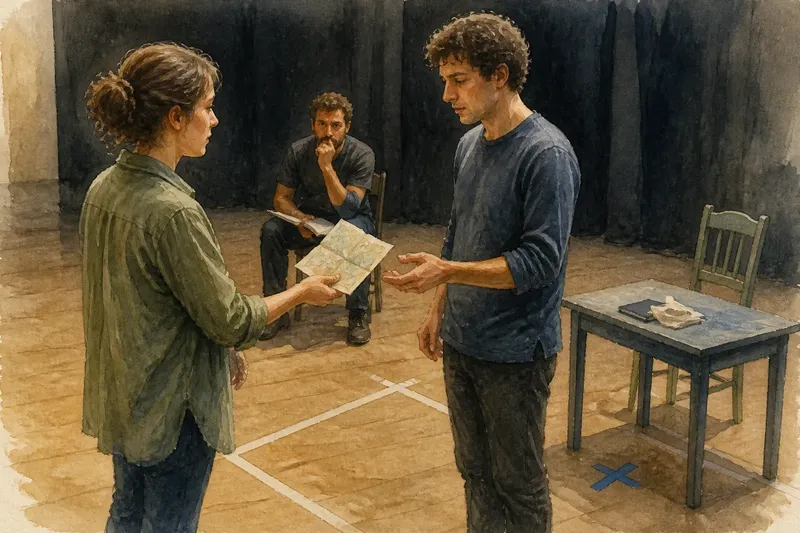
Work through one gesture in rehearsal
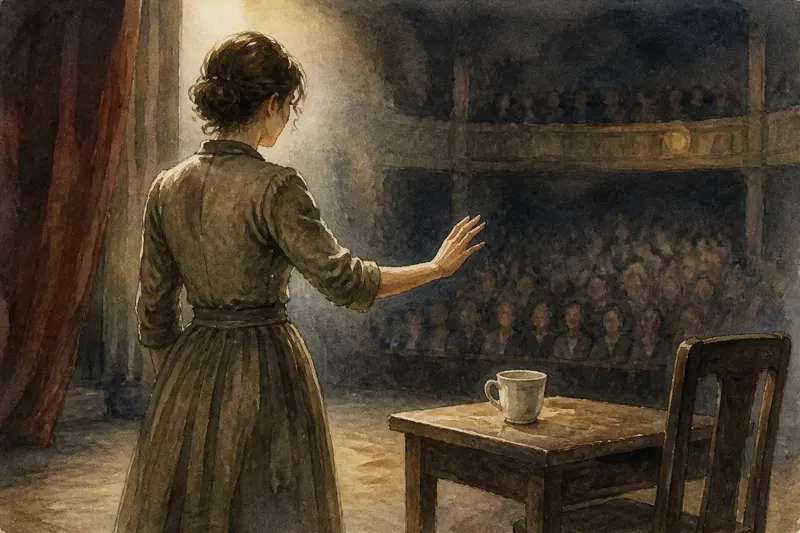
Say a performer must show a character deciding not to touch a cup on a table. In this invented situation, the starting point is a scene in which the performer is already pacing and the hand reaches towards the cup as part of that movement.
The performer first pauses the pacing, then lets the hand approach and stop short, and finally draws it back before resuming the walk. The expected observable result is a distinct interruption: the audience can follow the approach, the refusal and the return to movement. If the refusal still blends into the pacing, the performer can lengthen the pause or change the hand’s path; if it feels overstated, the approach can remain smaller while the surrounding movement stays quiet.
Questions about gestures at a distance?
Should performers make every gesture larger for a big theatre?
No. Enlarging every action can flatten differences between moments. A clear path, a deliberate pause or a change in rhythm may be enough to make a particular gesture readable.
Why can a small gesture seem unclear?
It may blend with other movement or lack a distinct beginning and finish. Quieting the body around it or changing its path can help the audience recognise the action.
When does holding a gesture help?
A brief hold can give the audience time to register a decision or interruption. It works best when the hold belongs to the character’s action, rather than appearing solely to display the movement.
How can a performer keep a gesture natural?
Keep the movement connected to what the character is trying to do, and adjust its timing or direction before enlarging it. The aim is to make the change clear while preserving the scene’s physical rhythm.
For a gesture that reads from the back row, clarity is not a matter of constant display. Let one meaningful movement stand out through its path and rhythm, then allow the scene to continue without asking every action to compete for attention.