The Quiet After the Last Line
Theatre pauses after dialogue can make a choice, revelation or sound register. Learn how to shape the silence so the next action feels connected.
When an actor finishes a line, should the next action begin at once or wait? A theatre pause after dialogue earns its place when the silence gives the scene a playable change: a choice settles, a sound emerges, or a listener takes in what was said.
There is no fixed duration that suits every moment. The practical question is what the performers do during the quiet, and what the next action needs to follow from it.
Give the pause a playable purpose
Begin with the line that has just ended. Does it reveal something, close an argument, make a choice, or leave a question unresolved? That change points towards the work the silence can do.
- After a revelation: Let the listener take in what has changed. The speaker can remain still while the listener’s response unfolds.
- After a decision: Allow the choice to settle before the character acts on it. The next movement can then feel like a consequence, not routine business.
- After a joke or sharp retort: Keep the gap responsive to laughter or the quick return of the exchange. A solemn hold may blunt the scene’s energy.
- After a line that ends a scene or relationship: Let the final stage image remain if the words have changed the relationship. A transition can follow once that image has completed its work.
A pause is active when something continues: a character waits for an answer, resists a movement, listens, or avoids looking at another person. If nothing is happening, the scene may need a clearer task rather than a longer silence.
Match the pause to the scene’s sound
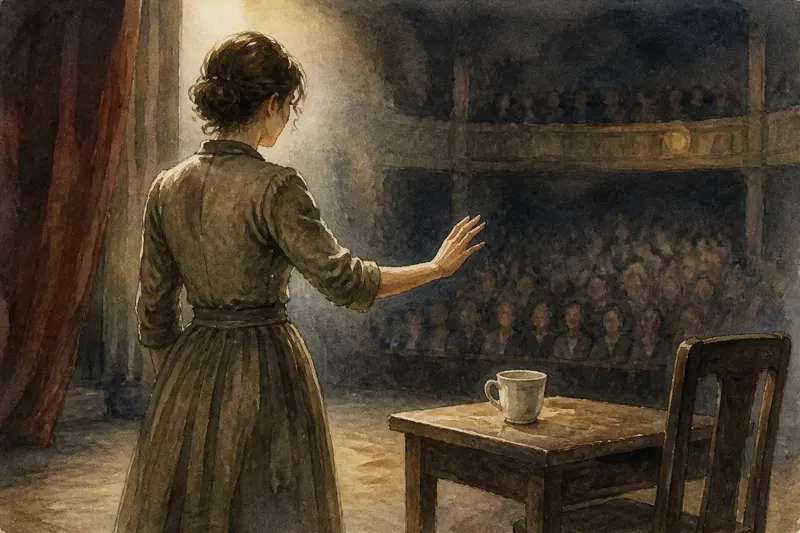
Quiet does not always mean silence. A door closing, a distant bell, or a score continuing beneath the dialogue may come forward once speech stops. Decide whether that sound belongs inside the pause or whether exposed quiet is the point.
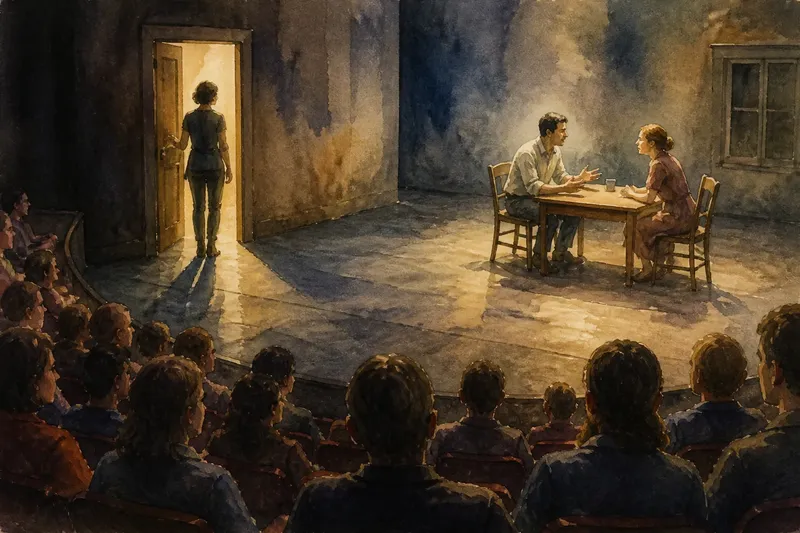
In a small studio, a breath or a hand stopping mid-task may carry the moment. In a large auditorium, the same detail may be hard to perceive, so the pause may need a more distinct sound or a clearer action. In either space, avoid adding music merely to cover a gap that feels uncomfortable.
For in-the-round staging, decide whether a pause depends on a particular view of the performer. A concealed face or small gesture may be available to only part of the room; a held sound, a turn, or a change in what the performer is doing can carry the moment without relying on one angle.
Shape the silence before the next action
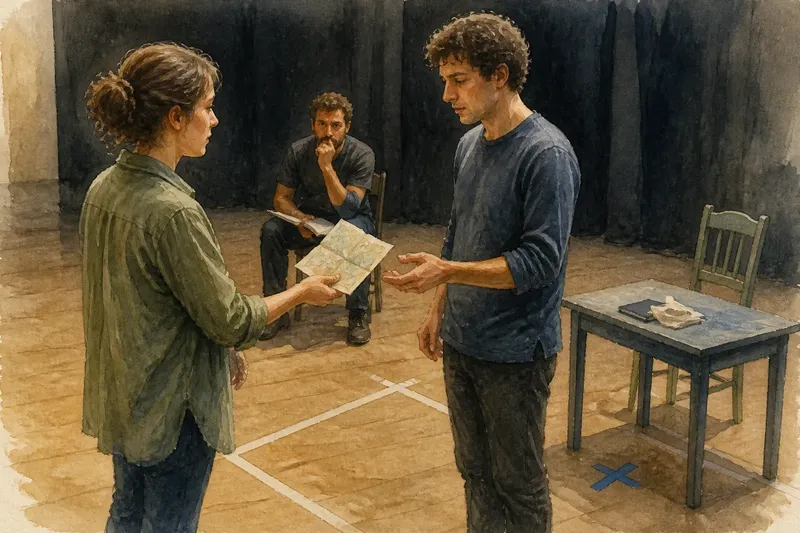
During rehearsal, connect the pause to an action that follows from the line. If a character ends a conversation, for instance, the pause might lead to turning away; gathering a coat and crossing the stage as well may introduce business that the moment has not prepared.
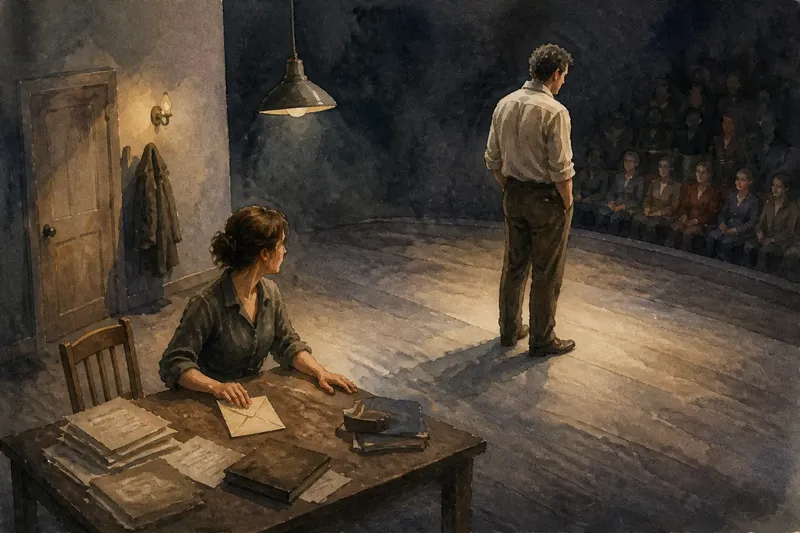
Say you are staging an invented scene: one character says, “I know you kept the letter,” while the other sorts papers at a table. The director asks the sorting to stop on the final word; the listener keeps a hand over one unopened envelope, then looks up; the speaker turns away only after that look. The resulting sequence gives each action a clear cause. If the envelope cannot be seen from the audience’s seats, the director can change its placement or use a sound linked to the letter, rather than simply stretching the pause.
A useful rehearsal choice is to identify what each performer attends to. The listener might wait for a reply that will not come, while the speaker holds back a movement. These specific tasks give the silence shape without asking anyone to manufacture a mood.
Questions about pauses after dialogue?
How long should a theatre pause after dialogue last?
Hold it until the intended change has had room to register, then let the next action begin. If the performers’ attention becomes vacant before that point, clarify what they are waiting for or listening to.
Should actors hold eye contact during silence?
Only when eye contact belongs to the relationship in that moment. Looking away, attending to an object, or listening towards an offstage sound may serve the scene more clearly.
Should music continue during a pause?
Keep the score when it carries the moment or makes a particular sound more noticeable. Stop it when exposed quiet is part of the scene; do not use music simply to fill an uncomfortable gap.
How can a director tell whether the pause is working?
Check whether the performers have a playable task and whether the sound or action the scene depends on can be perceived. If either is unclear, adjust the task, staging or sound cue before lengthening the silence.
Let the pause hand the scene forward
During rehearsal, try the next action immediately after the line, then try it after a deliberate pause. Notice which version makes the action feel connected to what was said, and ask each performer what they are attending to during the quiet.
A theatre pause after dialogue is most useful when it prepares the next action rather than suspending the scene for its own sake. Name the sound, withheld movement or unanswered expectation that carries it, and the silence becomes part of the scene’s work.